
Preparing students for a bright future in STEM: the Jesse D. Jones College of Science, Engineering and Technology
By Dani Ray | Sep 3, 2026
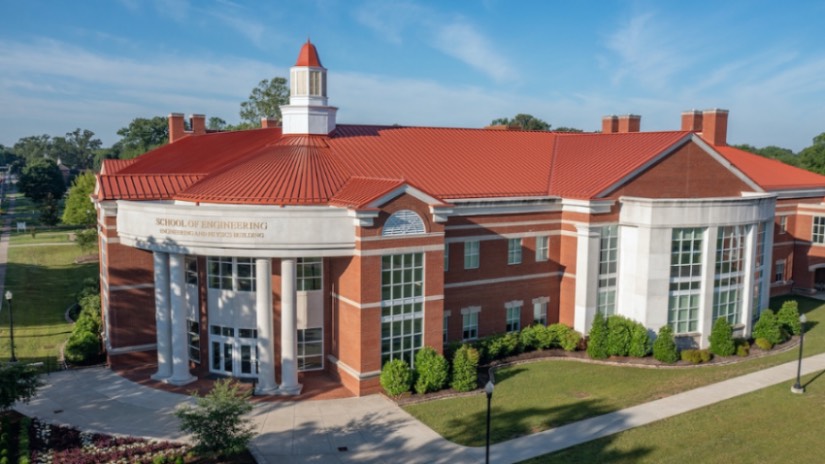
It’s no secret that careers in science, technology, engineering and mathematics (STEM) are highly desirable. According to the U.S. Bureau of Labor Statistics, the median annual wage for STEM occupations in 2024 was $103,580, compared to $49,500 the same year across all occupations.
Murray State University’s Jesse D. Jones College of Science, Engineering and Technology (JCSET) is helping students prepare for and thrive in STEM careers. For example, graduates of the cybersecurity network management (CNM) program — housed within the School of Engineering — join a global network of alumni who are employed at Google, Microsoft, Cisco Systems, Palo Alto Networks and Amazon Web Services, among others.
The mission of the Jones College of Science, Engineering and Technology is to provide quality educational experiences in science, mathematics, engineering and technology at the undergraduate and graduate levels through excellent instruction, pure and applied research and outreach to the service region.
Six departments make up the JCSET: Earth and Environmental Sciences, Mathematics and Statistics, Occupational Safety and Health, Biological Sciences, Chemistry and the School of Engineering.
With nearly 1,500 students and 60 academic programs and tracks, the JCSET is a large college with a wide array of offerings to choose from; however it maintains a small classroom feel with a 14:1 student to faculty ratio.
Degree options (undergraduate):
Biological Sciences: biology, biomedical sciences, secondary certification, fisheries/aquatic biology, pre-dentistry, pre-medicine, pre-pharmacy, pre-physician assistant, pre-physical therapy and wildlife and conservation biology.
Chemistry: chemistry, secondary certification, pre-medicine, pre-dentistry, pre-pharmacy, biochemistry, forensics and polymer and materials science.
Earth and Environmental Sciences: anthropology, archaeology, earth science secondary certification, geography and geographic information science, environmental science and geology.
Mathematics and Statistics: mathematics, secondary certification, applied mathematics and a pre-Master of Business Administration option.
Occupational Safety and Health: occupational safety and health, with the choice of two tracks: occupational safety and health or environmental health and safety.
School of Engineering: civil and sustainability engineering, aerospace engineering, electrical engineering, mechanical engineering, advanced physics, construction and architecture management, electromechanical engineering technology, manufacturing engineering, physics - pre Master of Business Administration, physics secondary certification, design engineering technology, cybersecurity and network management and master’s degree and certificate options.
To learn more about graduate program offerings, visit bit.ly/JCSETPrograms.
The School of Engineering also houses Murray State’s Cyber Education and Research Center, which provides education, research, development and outreach for the University’s cyber-related programs.
In 1997, Kentucky House Bill 1 created Programs of Distinction through the Kentucky Council on Postsecondary Education at public postsecondary institutions, including Murray State University’s cybersecurity program. Murray State has been designated a Center for Academic Excellence in Cyber Defense by the National Security Agency and the Department of War since 2019.
The CNM program is recognized as a Center for Academic Excellence in Cyber Defense, certified through the Quality Assurance Commons with the Essential Employability Qualities Certification, and has won multiple national awards over the years through ITERA, including Program of the Year.
To learn more about the Cyber Education and Research Center, visit murraystate.edu/cyber.
To learn more about the Jones College of Science, Engineering and Technology, visit bit.ly/JCSET.
What’s in a name?
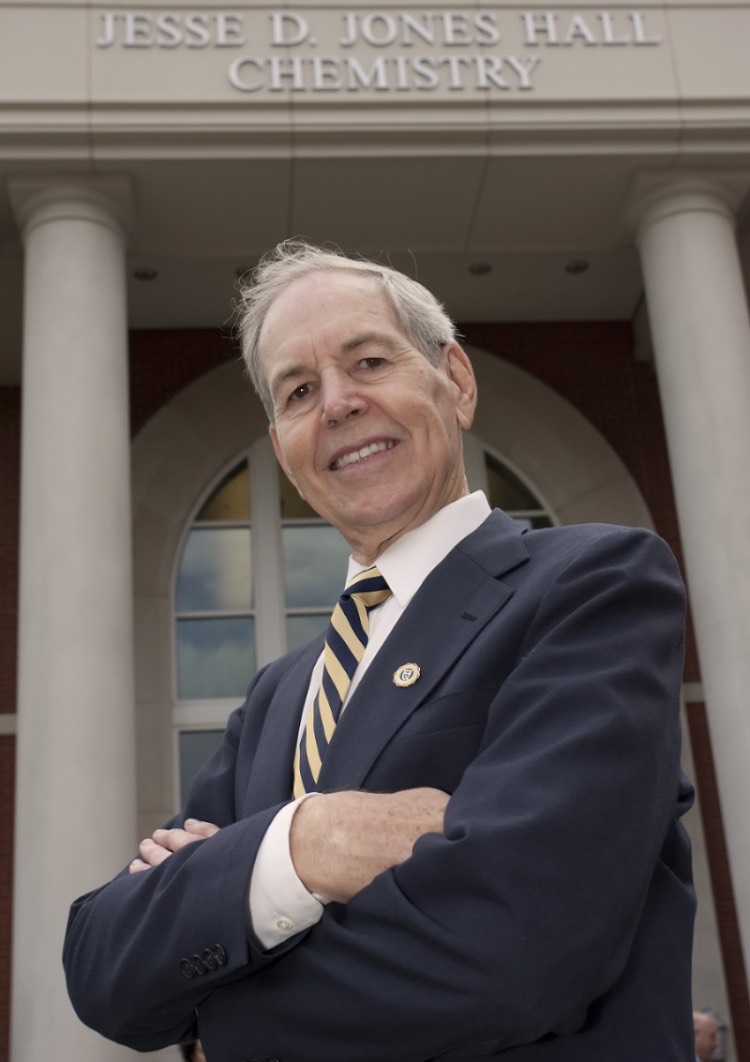
Jones was the single most generous individual donor in the University's history whose philanthropy touched programs and students across campus over a span of decades. Not only does the JCSET stand as a testament to his generosity; the Jones Chemistry Building on the Dr. Gene W. Ray Science Campus also bears his name, and the Jesse L. Jones Family Clock Tower, named in honor of his father, has become a symbol woven into the heart of the University’s landscape.
Jones supported the annual Math Day and named the Ross Mathematical Studies and Career Center for his grandmother, Hattie Mayme Ross, funded the Racer Oral Communications Center in Waterfield Library, supported equipment purchases to be included in the new Jackson Hall nursing building for which he is to be recognized through the naming of the Dr. Jesse D. Jones Faculty Lounge. He funded the renovations in Heritage Hall, establishing the Hall of Benefactors and Distinguished Alumni. In addition to these significant gifts, Jones established scholarship and professorship funds for both student and faculty support through the Jesse D. Jones Scholars and Jesse D. Jones Endowed Professorships. The Hattie Mayme Ross Science Library is named for his grandmother as well as the Jones-Ross Research Laboratory. Jones made a gift in honor of his friend, and named the Dr. Gary W. Boggess Science Resource Center. He also funded the connection between the Engineering and Physics Building and Jones Hall and named it after his son — the Timothy D. Jones Gateway.
Jones was honored with a Murray State University Alumni Association Distinguished Alumni Award, as well as their Golden Horseshoe Award for service. He was also granted an Honorary Doctorate in 2010 in recognition of his incredible career in chemistry, mostly with Albemarle Corporation, where he worked to develop and secure more than 30 patents. His legacy lives on through the institutions that bear his name, the students who benefit from his generosity and the community that he shaped.
To support the Jesse D. Jones College of Science, Engineering and Technology, contact the Office of Development at 270-809-3001 or msu.giving@murraystate.edu or give online at bit.ly/4e47jlo.
JCSET in the news
Murray State University and Universidad EIA launch dual degree partnership in Engineering Physics with Aerospace Engineering track

Building on a strong foundation of collaboration between the two institutions, this new pathway allows students from Universidad EIA to complete advanced coursework at Murray State as part of their degree program. Through this structure, students gain rigorous technical preparation while fully immersing themselves in the U.S. academic and cultural environment, an experience that enhances both professional readiness and global perspective.

The dual degree agreement is the result of a strategic academic visit to Universidad EIA by Dr. Rubén Ricardo, director of International Recruitment at Murray State, accompanied by Dr. Robert Fritz, professor of Spanish. Their visit focused on strengthening academic alignment, reviewing curricula and identifying high-impact opportunities for collaboration. These discussions culminated in a shared vision for a carefully structured dual degree that respects accreditation standards while advancing innovation in engineering education.
Dr. Jamie Rogers, director of the School of Engineering at Murray State, highlighted the mutual value of the partnership.
“The School of Engineering is excited about this agreement with EIA University and looks forward to welcoming students from EIA in our engineering courses. Not only does this partnership provide an international opportunity for EIA students, but also benefits Murray State engineering students with multicultural experiences such as working with international students on team design projects,” Rogers said.
From EIA’s perspective, the agreement represents a strategic step toward preparing globally competent engineers. Manuela Vélez Restrepo, Jefe de Internacionalización at Universidad EIA, emphasized the broader impact of the initiative.
“Through this double degree in Aerospace Engineering, our students gain not only rigorous technical training, but also invaluable exposure to the U.S. academic and cultural environment. Developing this program with a high-quality partner such as Murray State University was essential; the academic and curricular review process confirmed a strong alignment grounded in academic rigor, excellence and a shared vision for engineering education. This partnership reflects our joint commitment to preparing globally competent engineers ready to lead in international and highly innovative contexts,” she said.
Beyond student mobility, the program promotes bilingual and bicultural engagement, faculty collaboration and shared innovation. Students benefit from enhanced academic pathways, while both universities strengthen their capacity for internationalized teaching, learning and applied research.
This agreement aligns closely with Murray State’s renewed momentum under the leadership of President Dr. Ron Patterson, reflecting the University’s strategic emphasis on global engagement, academic distinction and meaningful partnerships that deliver long-term value.
The Institute for International Studies extends its sincere appreciation to the School of Engineering, the Global Languages Program and the leadership and faculty at Universidad EIA whose vision and commitment made this initiative possible. This dual degree partnership represents not only a new academic pathway, but also a forward-looking investment in global engineering education and international collaboration.
Murray State University biology professor and researcher discovers and names new fly species

The species' full name is Neomintho beckersi.
It all started when Beckers was collecting katydids in northern Florida for a research project funded by the National Science Foundation in 2021.
“After I brought the katydids to Murray, I noticed that a couple of larvae emerged from the katydids,” Beckers said. “I was aware that these katydids are used as hosts by the eavesdropping parasitoid fly Ormia lineifrons, that we have here in Kentucky and kills many of the calling katydid males that try to attract females for mating (I do research on those). Thus, I assumed it would be one of those flies and reared them to adulthood in my lab.”
However, when the fly emerged as an adult from its pupal stage, an insect’s stage of development between larva and adult, it was pretty clear that this was not one of the Ormia lineifrons flies. Instead of a yellowish white body, this fly was black and more slender. Beckers contacted a specialist on this group of flies, Dr. James E. O'Hara of the University of Guelph in Ottawa, Ontario, Canada, and he was not sure at first what to do with it either. He did some research in museums looking through collections and told Beckers that this was a new species and that he was allowed to name it. O'Hara did some further research and has now officially described the species.
The fly parasitized a katydid host, Neoconocephalus triops. Not much is known about how this fly finds its hosts since it has no ears like other parasitoid flies that use the mating songs to find the calling hosts. Also, they are day active when the katydids are not calling and typically hide in the vegetation from visual predators. So, how this fly finds its hosts is a mystery, Beckers said. However, phylogenetically (relationship) wise, this fly belongs to a group of parasitic flies that uses katydids and crickets as hosts.
“My finding that this fly actually parasitized a katydid is also the first direct evidence that supports this taxonomic grouping related to the other parasitic fly groups,” said Beckers. “Flies of this particular group (Euthelairini) are established in the Neotropics, which adds a little more surprise to this discovery in northern Florida.”
Assuming that the parasitism of the host is similar to that of other closely related flies that use crickets as hosts, the fly's larvae are placed by the female fly on the katydid host. They then bury into the body of the host and develop inside while feeding on non-vital organs of the host. Once the development inside the host is completed (7-10 days), the larva breaks through the body wall of the host, which kills the host. Because they kill their host, they are actually parasitoids, not parasites. Within the same day of emergence from the host, the larvae pupate and develop into adult flies that emerge from the pupa. As evidence, Beckers said he found the pupa of this fly in the cage with his katydids.
“Dr. Beckers' discovery adds to his work on the relationships between katydids and parasitoid flies,” said Dr. Sterling Wright, professor and chair of the Department of Biological Sciences. “The fact that the new fly species cannot hear will undoubtedly keep Dr. Beckers very busy while he studies the dynamics of this interesting relationship.”
“This is a very exciting discovery by Dr. Beckers and will add to the many research breakthroughs that have occurred in our Department of Biological Sciences,” said Dr. Maeve McCarthy, interim dean of the Jesse D. Jones College of Science, Engineering & Technology.
Read more about Neomintho beckersi at bit.ly/4sfHgx2.

“I let Sylvie water the bed, which she promptly flooded,” said Sullivan-Beckers, associate professor of biology at Murray State. “All these freshly-killed treehoppers came floating to the surface. I worked with treehoppers as a Ph.D. student, and I knew they didn’t belong in the soil; they’re plant-feeding insects.”
Sullivan-Beckers observed that the treehoppers were deposited by wasps, which had been stunning them before carrying them into their underground nests to feed their young. But she also noticed a treehopper species that she didn’t recognize. Sullivan-Beckers fully excavated her garden, and, curious to know whether the unusual treehopper truly was a new species, she reached out to her Ph.D. advisor, Dr. Rex Cocroft at the University of Missouri, who in turn put her in touch with Dr. Stuart McKamey of the United States Department of Agriculture.
Sullivan-Beckers and McKamey found that it was, in fact, a new species of treehopper, the first of its genus to be found in North America. The genus is very small—this was only the fifth species of the genus to be described, and all of the others are in Central America. The pair wrote a publication designating the new species, which was released in August 2019.
Sullivan-Beckers decided to honor her daughter’s discovery by requesting the species officially be designated Hebetica sylviae.
“As soon as it was confirmed as a new species, I knew I wanted to name it after Sylvie,” said Sullivan-Beckers. “She was at the heart of the discovery, and it’s not every day a mother gets the chance to name a species after her child.”
She added, “I still can’t believe that these undiscovered treehoppers were essentially in my own backyard. What’s even crazier is that I never would have found them had it not been for the wasps delivering them to my flower bed and my daughter overwatering it. It’s true that science involves luck and serendipity. I was at the right place at the right time with the perfect field assistant.”
Beckers said he has challenged his wife to find the next new species since he has now tied the record between the two.
Murray State University helps develop patented technology for recycling multicomponent plastics
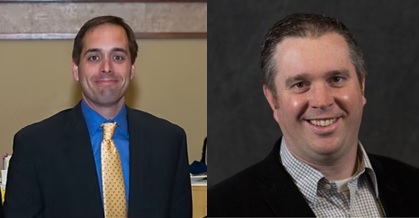
The technology specifically targets streams that contain mixtures of polyesters such as polyethylene terephthalate (PET) and polyolefins such as polyethylene (PE), two of the most utilized commodity plastics, which together constitute 40-50% of all plastic waste globally.
Recycling of plastics in the U.S. remains at a surprisingly low level (less than 9%, according to a 2020 research article that Miller also contributed to, which can be found at bit.ly/45QIB5j) with most plastic waste ending up in landfills or being incinerated; therefore there is a great deal of interest in exploring relatively inexpensive alternatives to current recycling technologies.
Polyolefins and polyesters such as PE and PET are commonly used in packaging, especially for food, in the form of films made up of layers of different types of plastics adhered together. These films are rarely recycled as the layers are extremely difficult to separate physically, and traditional melt reprocessing is not effective because liquefied PET and PE do not mix, resulting in reprocessed films which lack the necessary mechanical properties for reuse.
The new patented technology describes a process by which multi-block copolymers are used at low levels during melt processing to essentially “tie” the layers together like a piece of thread. The reprocessed films were found to exhibit stronger polyester/polyolefin interlayer adhesion than the original multi-layered material as demonstrated through the analysis of mechanical properties and scanning electron microscopy images taken after freeze-fracturing.
Overall, the technology represents a significant advancement in the recycling or upcycling of PET/PE waste streams through the melt blending of preformed multi-block compatibilizers. The technology could be applied to PET/PE mixed-plastic waste streams which are either impossible to physically separate through traditional melt reprocessing or too inconvenient to sort. Further, products where the multi-block compatibilizer is preloaded into the virgin material could make them ready for recycling after their initial use.
Support for the research was provided by the National Science Foundation-sponsored Center for Sustainable Polymers at the University of Minnesota, and was completed in collaboration with Dr. Christopher Ellison, professor of chemical engineering and materials science at the University of Minnesota.
The patent (US 12281204 B2) was issued in April of 2025.
“I’ve known Chris Ellison since our days as senior scientists at the Rohm and Haas Company in the mid-2000s,” said Miller. “Even then, Chris was an excellent visionary. We’ve collaborated several times since moving to academia, but this project in particular was the first time where we dove head-first into an area of serious global concern. Plastic pollution is a major problem, and scientists must develop creative and relatively inexpensive ways to recycle or upcycle commodity ‘throw away’ plastics. Chris had an idea that these multi-block compatibilizers might help with recycling PET/PE mixed plastic waste, and he needed someone with synthetic expertise. That’s where our team at Murray State fit in. We developed the technology to tie the PET and PE linkers together and support the overall intellectual discovery.”
The PET polymers, as well as the multi-block copolymers, were prepared and characterized at Murray State University, while the PE polymers, film fabrication and film testing were completed at the University of Minnesota.