
Where it all began: Murray State University’s roots in educator preparation and the College of Education and Human Services
By Jillian Smith and Dani Ray | Jun 3, 2026
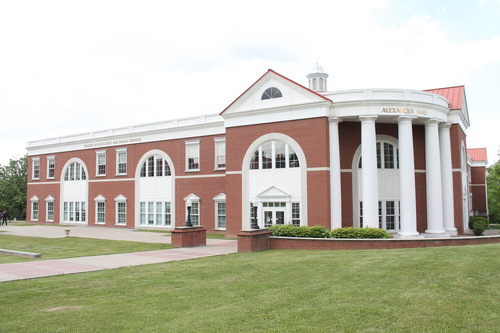
Murray State University was established in 1922 as one of the first Normal schools, designed for educator preparation. The University’s history and foundation in educator preparation speaks to the well-knit fabric that is the College of Education and Human Services (COEHS).
The mission of the College of Education and Human Services is to prepare future leaders, advocates and practitioners through authentic, engaging and student-centered academic programs for successful careers that positively impact communities.
The College of Education and Human Services’ departments and programs span a wide variety of disciplines from elementary education to communication disorders to criminal justice. The COEHS provides students with unique hands-on experiences during their pursuit of an education degree in addition to the very best in traditional classroom experiences.
The COEHS has built on its historic foundation over the years, earning several esteemed accreditations. The Counselor Education Program at Murray State University is a Council for Accreditation of Counseling and Related Educational Programs-accredited program dedicated to providing quality education and training for individuals pursuing careers in counseling or school psychology. The social work program at Murray State has been continuously accredited by the Council on Social Work Education since 1974. The Master of Science Graduate Program in Speech-Language Pathology at Murray State is accredited by the Council on Academic Accreditation in Audiology and Speech-Language Pathology of the American Speech-Language-Hearing Association. Murray State’s educator preparation programs are accredited by the Council for the Accreditation of Educator Preparation and the Kentucky Education Professional Standards Board.
Five departments comprise the College of Education and Human Services: Adolescent, Career and Special Education; the Center for Communication Disorders; Criminal Justice and Social Work; Early Childhood and Elementary Education; and Educational Studies, Leadership and Counseling.
Undergraduate programs offered:
-
-
-
-
-
- Career and technical education
- Communication disorders
- Criminal justice
- Elementary education
- Health and physical education
- Human services
- Interdisciplinary early childhood education
- Middle school education
- Secondary education
- Social work
- Special education
-
-
-
-
Graduate programs offered:
-
-
-
-
-
- Career and technical education
- Counseling
- Education/school administration
- Human development and leadership
- Interdisciplinary early childhood education
- Library media
- P-20 and community leadership
- Postsecondary education administration
- Reading and writing education
- School psychology
- Special education
- Speech-language pathology
-
-
-
-
In addition, the COEHS has 16 active student organizations in which to get involved: Active Minds, Alpha Upsilon Alpha Literacy Honors Society and Reading Club, Best Buddies, CDI Diversity Council, Chi Sigma Iota – Mu Sigma Chi, COEHS Student Advisory Council, COEHS Student Ambassadors, Criminal Justice Society, Kappa Delta Pi International Honor Society in Education, Murray State Middle Level Association, Murray State Student Council for Exceptional Children, Murray Area Council of the International Reading Association, National Student Speech Language Hearing Association, Student Association of Social Workers, Tau Upsilon Alpha National Organization for Human Services Honor Society and Murray State Family, Career and Community Leaders of America.
COEHS by the numbers:
-
-
-
-
-
- 122 student teachers were placed in school districts in the 2025-26 academic year.
- 1,849 students at Murray State University are part of the College of Education and Human Services.
- 501 students were named to the COEHS Dean’s and/or President’s List for the Spring 2026 semester.
- 11 COEHS students were named Who’s Who Among Students for the 2025-2026 academic year.
- Nearly 75% of teachers within the 18-county western Kentucky region are Murray State graduates.
- The COEHS received more than $630,000 in grants during the 2025-26 academic year.
- More than $700,000 in college-specific scholarships were awarded for the 2025-26 academic year.
-
-
-
-
Learn more about the College of Education and Human Services at murraystate.edu/coehs.
COEHS in the news:
New Crime Victim Advocate Certificate launches through Murray State University’s Department of Criminal Justice and Social Work
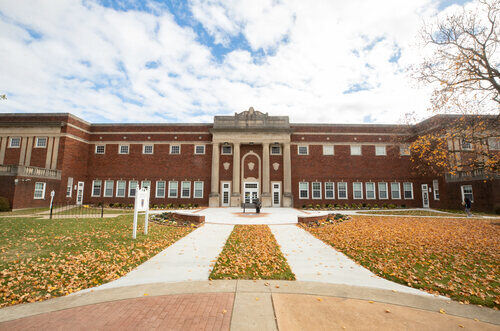
Murray State University’s College of Education and Human Services is preparing students to become compassionate, highly trained advocates for victims of crime through its interdisciplinary Crime Victim Advocate (CVA) Certificate program.
Offered through the Department of Criminal Justice and Social Work, the certificate addresses the growing need for professionals who can effectively support victims while navigating the complexities of the criminal justice system.
“There is an increasing emphasis on victims’ rights in the criminal justice field, and a recognition that poor interactions with victims of crime are not only bad for victims, but also for the system,” Dr. Katy Hancock, department chair of Criminal Justice and Social Work said. “Victims who have had a poor experience with the system are less likely to pursue or assist with prosecution and are also less likely to report crimes in the future.”
The Crime Victim Advocate Certificate is designed for students interested in entering the expanding field of victim advocacy while also benefiting those pursuing careers in law enforcement, social work, corrections, legal services and related professions.
Students enrolled in the program gain practical and specialized skills focused on victim support, crisis intervention and trauma-informed care. Coursework covers victim rights and policies at the federal, state and local levels, crisis management, ethical and confidentiality standards, case planning and culturally competent advocacy.
Jenifer Hart, social work instructor, said the program emphasizes both technical knowledge and interpersonal communication skills essential to effective advocacy.
“The Crime Victim Advocate Certificate prepares students to support, guide and empower victims through specialized training,” Hart said. “Through evidence-based practices, we train students to provide compassionate, trauma-informed care, skilled, effective communication and expert navigation of victim rights.”
Hart added that students also develop confidence in crisis intervention and de-escalation strategies while learning how to help victims feel heard and validated during recovery.
The program incorporates real-world experiences through case studies, service assessments and instruction from faculty with professional backgrounds in crisis intervention and victim advocacy. Students also learn how to navigate both civil and criminal justice systems while addressing the unique needs of various victim populations.
Graduates of the certificate program are prepared for careers as victim advocates in prosecutor’s offices, courts and law enforcement agencies, as well as positions in rape crisis centers, domestic violence shelters, human trafficking organizations, legal aid societies and government offices focused on victims’ services.
The certificate also seeks to address service gaps throughout western Kentucky and surrounding rural communities.
“As a rural area, the local and regional community is underserved in terms of services,” Hancock said. “Individuals who are trained in CVA skills will be better able to assess community services, advocate for improved access and help connect victims with the support they need.”
What makes the program especially distinctive is its interdisciplinary structure and national recognition. The curriculum has been approved by the National Advocate Credentialing Program, a division of the National Organization for Victim Assistance. Students who complete the certificate are eligible to apply for the organization’s basic credentialing program, allowing them to graduate with both academic and professional credentials.
Hancock noted that the program intentionally uses the term “victim” rather than “survivor” because it reflects the legal, academic and professional terminology most commonly used throughout the field and within advocacy organizations nationwide.
To learn more about the Criminal Justice and Social Work Department, visit murraystate.edu/cjsw.
Murray State University students help provide life-changing communication device for local child
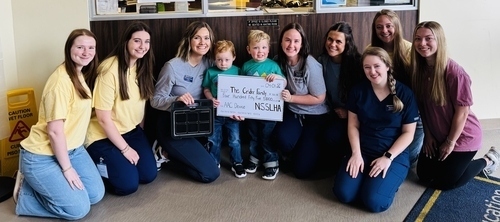
A collaborative effort between faculty and students in the Center for Communication Disorders (CDI) at Murray State University has helped provide a high-tech augmentative and alternative communication (AAC) device to a local child, Hardie Crider, opening new pathways for communication, independence and connection.
According to the American Speech-Language-Hearing Association (ASHA), an AAC means all of the ways that someone communicates besides talking. People of all ages can use AAC if they have trouble with speech or language skills.
After months of therapy, advocacy and fundraising, undergraduate members of the National Student Speech Language Hearing Association (NSSLHA) donated $500 to cover the out-of-pocket cost of the device—an expense the Crider family was unable to afford. The device has now been shipped and is expected to arrive soon.
“Our organization was inspired to cover the cost of the AAC device after recognizing just how essential communication is to a child’s ability to connect, learn and fully engage with the world around them,” Melati Free, president of NSSLHA said. “As students studying communication disorders, we understand that communication is more than words; it is a fundamental human right.”
Hardie has been receiving weekly therapy services at Murray State’s Speech and Hearing Clinic, where graduate student clinicians have played a key role in his progress. Through structured sessions, students introduced both low-tech and high-tech AAC tools, gradually building the child’s ability to communicate effectively.
Graduate clinicians worked closely with Hardie’s clinical supervisor to document progress and submit a report for insurance approval for a personal device. Throughout the process, they also provided consistent updates and support to the child’s family.
Mary Grace Starks, CDI instructor, said graduate students at the Murray State University Speech and Hearing Clinic deliver weekly therapy sessions focused on developing targeted language skills, helping Hardie become a more independent and effective communicator.
“Graduate students have strategically worked with him to teach him how to use switches (a low-tech form of AAC) and slowly began introducing an iPad with a specific communication system (a high-tech form of AAC),” Starks said. “As Hardie became increasingly more successful in his communication attempts with the iPad AAC system during his therapy sessions with his graduate student clinicians, they worked, in collaboration, with their clinical supervisor to write and submit a report for insurance approval to receive a personal AAC device. The students provided updates regarding Hardie's progress with his AAC system with his family members who were present for his sessions.”
Students involved in the effort say the experience reinforced the importance of service and real-world application of their studies.
“It is important for students to support community members in this way because it allows us to transform what we learn in the classroom into meaningful action,” Free said. “Experiences like this cultivate empathy, compassion and a deeper understanding of the real challenges individuals and families face.”
Free said this initiative reflects NSSLHA’s mission of advocacy, service and professional development, while also highlighting the impact of hands-on clinical training within the department.
“By donating money for an AAC device, our organization demonstrated a commitment to empowering individuals through accessible communication,” Free said. “It embodies our mission of preparing future professionals who strive to make communication accessible for all.”
This effort underscores the power of collaboration between faculty, graduate clinicians and undergraduate students—demonstrating how academic programs can directly impact lives in the community.
For more information about the Center for Communication Disorders at Murray State University, visit murraystate.edu/cdi.