
Murray State University's Patricia Greer helps develop national guide to support schools recovering from gun violence
By Jillian Smith | Nov 10, 2026
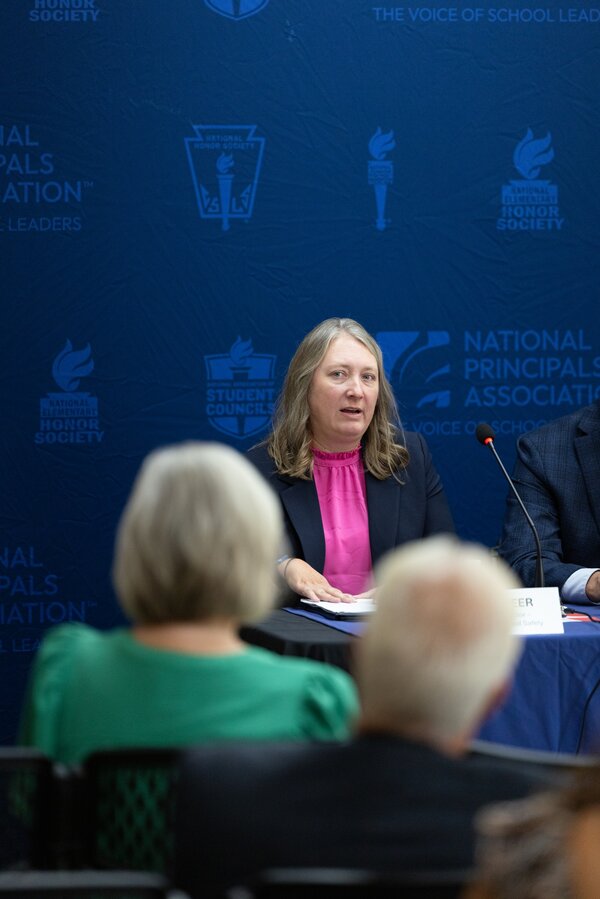
MURRAY, Ky. — Dr. Patricia Greer, director of the resource center for the Kentucky Center for School Safety, housed in the College of Education and Human Services at Murray State University, is using her firsthand experience as a school administrator to help educators across the nation navigate the challenges of school safety, crisis response and long-term recovery.
As a member of the Principal Recovery Network (PRN), Greer recently collaborated with 18 other current and former school leaders to develop the second edition of the Guide to Recovery, a national resource designed to help school administrators lead their communities through the aftermath of gun violence.
The updated guide was released Sept. 24 in Parkland, Florida, bringing together lessons learned from school leaders who have experienced tragedies in their own buildings. The publication expands upon the original 2022 edition, offering additional guidance on supporting students and staff, restoring a sense of safety and addressing the lasting effects of traumatic events.
For Greer, the work is deeply personal.
In January 2018, Greer was serving as principal of Marshall County High School in Benton, Kentucky, when a shooting claimed the lives of two students and injured several others. Her experience leading the school community through the tragedy and its aftermath now informs her efforts to support other educators facing similar circumstances.
Through her involvement with the PRN, Greer has helped translate those experiences into practical recommendations for school leaders, emphasizing the importance of listening to students and staff, rebuilding trust and recognizing that recovery extends far beyond the immediate aftermath of a crisis.
The updated guide places a greater emphasis on the long-term emotional and psychological needs of school employees, drawing on the firsthand experiences of principals who have led their communities through tragedy and recovery.
“The Guide to Recovery was developed and written by principals from across the country who have one thing in common: we have led through tragedy and recovery,” Greer said. “We lead different types of schools and live in different communities, but we quickly realized that trauma is trauma no matter where it occurs. I’ve worked with many principals who have used this guide to navigate post-tragedy events and decision-making, and I am proud to support all my colleagues as a member of the Principal Recovery Network.”
Greer emphasized that providing ongoing mental health resources and counseling opportunities for teachers, administrators and support staff is essential to helping a school community recover.
The guide also addresses preparing for potential crises, coordinating mental health resources, navigating legal proceedings and implementing safety measures that help students and staff regain confidence in their learning environment.
Drawing on her experience at Marshall County High School, Greer highlighted the importance of involving students in decisions about school safety. Following the 2018 tragedy, she worked to understand students' concerns and implement changes that would help them feel more secure when returning to school.
Beyond physical security measures, Greer advocates for creating school environments where students feel valued, supported and connected to trusted adults.
Her work reflects the broader mission of the Principal Recovery Network, which was established in 2019 to connect school leaders who have experienced gun violence. The organization provides peer support, shares recovery strategies and advocates for policies and resources that strengthen school safety and violence-prevention efforts nationwide.
The network's membership includes current and former administrators from schools such as Columbine High School in Colorado, Sandy Hook Elementary School in Connecticut and Marjory Stoneman Douglas High School in Florida.
As part of the guide's release, Greer joined fellow PRN members in Parkland, where they visited Marjory Stoneman Douglas High School and learned about the school's recovery efforts and safety practices.
Through her work with the Kentucky Center for School Safety and the Principal Recovery Network, Greer continues to contribute to conversations about school safety and the resources educators need to support their communities before, during and after a crisis.
Her involvement in the updated Guide to Recovery demonstrates how the experiences of Kentucky educators can inform national efforts to create safer, more supportive learning environments.
The Guide to Recovery: Second Edition is available through the National Principals Association's Principal Recovery Network at bit.ly/4ilxKq1.